
THE BOYS’ ROOM INSIGHTS
Student Growth & Development
Why Belonging Matters More Than Confidence
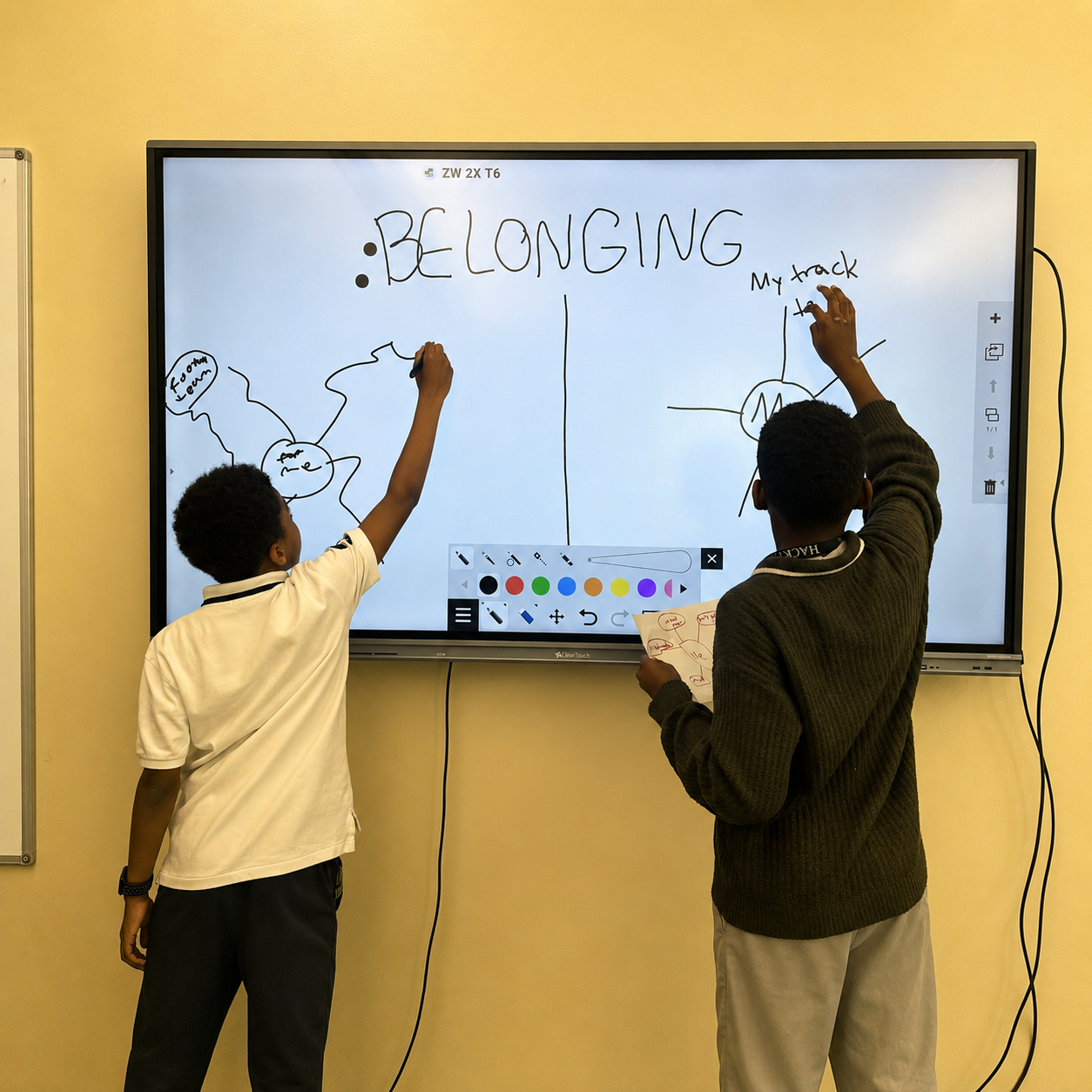
Confidence is often one of the first qualities adults hope to develop in young people. We want boys to speak up in class, try unfamiliar things, advocate for themselves, lead with conviction, and trust their own abilities.
Those behaviors become easier when a young person feels secure in the environment around him.
Belonging gives boys a foundation for participation. It helps answer questions that may never be spoken aloud: Do people here understand me? Can I make a mistake without losing my place? Will someone listen if I have something difficult to say? Is there room for me to show up as myself?
When those questions feel settled, boys have more freedom to engage.
Belonging affects how willing boys are to participate
A boy can know the answer to a question and still hesitate to raise his hand. He can have an idea and decide to keep it to himself. He can need help and choose not to ask for it.
Adults sometimes interpret these moments as shyness, lack of confidence, or disengagement. The surrounding environment can be just as important.
Participation carries social risk. Speaking creates the possibility of being corrected, misunderstood, laughed at, ignored, or judged. Young people are constantly learning which environments feel safe enough for that risk.
A strong sense of belonging reduces some of that uncertainty.
When boys regularly experience being heard and taken seriously, contributing becomes more familiar. They learn that their ideas have a place in the conversation and that disagreement or mistakes do not automatically threaten their relationships with the people around them.
Over time, those experiences can support the kind of confidence adults eventually see from the outside.
Boys need opportunities to be known
Belonging grows through relationships.
Young people notice when adults remember what matters to them. They notice when someone follows up on a story they shared the week before. They recognize which peers make room for them in a conversation and which adults listen long enough to hear the full answer.
These details communicate that a young person is known within a community.
That matters because boys are often moving through several different environments at once. They may experience one version of themselves at home, another at school, another with friends, and another in extracurricular spaces. Each environment comes with its own expectations.
A supportive community gives boys room to understand themselves across those settings.
At The Boys’ Room, conversation, reflection, group activities, and shared experiences create regular opportunities for boys to learn about one another. The value comes from what develops over time. Familiarity creates context. Context helps people understand each other more fully.
A boy becomes more than the quiet student, the high achiever, the athlete, the class clown, or the child who had a difficult day. The people around him begin to know more of his story.
Belonging gives boys room to practice
Many of the skills adults want boys to develop require practice with other people.
Leadership involves learning how to influence a group while remaining aware of others. Self advocacy requires recognizing what you need and communicating it clearly. Conflict resolution requires staying engaged when a relationship becomes uncomfortable. Emotional awareness requires noticing an internal experience and finding language for it.
These skills develop through real interactions.
A consistent community gives boys opportunities to try, adjust, and try again. One week a boy may lead a conversation. Another week he may need someone else to draw him into it. He may handle a disagreement well in one situation and struggle in another.
The continuity matters because growth can be observed across time rather than judged from one moment.
Adults can support this process by paying attention to the conditions surrounding a boy’s behavior. A useful question is, “What would make it easier for him to participate here?”
The answer may involve more preparation, a stronger relationship with the adult leading the room, additional time to respond, clearer expectations, or greater familiarity with the other young people present.
A strong sense of belonging gives boys more freedom to participate, contribute, and grow.
Adults help shape the environments boys enter
Parents, educators, mentors, and other adults influence whether young people experience a space as somewhere they belong.
Small interactions carry weight.
An adult who asks a follow up question communicates interest. A teacher who makes room for a student to finish his thought communicates that his contribution matters. A parent who stays curious during a difficult conversation creates an opening for greater honesty. A mentor who remembers something a boy shared several weeks earlier communicates that his words were worth remembering.
Consistency gives those moments meaning.
Young people learn what to expect from a community by experiencing it repeatedly. They begin to understand how people respond when someone struggles, makes a mistake, disagrees, succeeds, or needs support.
Those patterns help determine how much of themselves boys are willing to bring into the room.
Pay attention to where a boy becomes more himself
One way adults can understand belonging is by observing where a young person seems most comfortable participating.
Where does he talk freely?
Who does he seek out?
Where does he share ideas without needing much encouragement?
Which environments make it easier for him to ask questions?
Where does he recover most easily after making a mistake?
Those observations can reveal the relationships and conditions that help him engage.
They can also point toward environments where additional connection may be needed.
A boy who rarely contributes in one setting may have plenty to say somewhere else. Learning what changes between those environments can give adults useful information about how to support him.
Belonging is built over time
There is rarely one conversation, activity, or program that creates a lasting sense of belonging.
It develops through repeated experiences of being welcomed into the group, being listened to, contributing something meaningful, navigating challenges, and discovering that there is still a place for you afterward.
For boys, those experiences become part of how they understand themselves in relationship to other people.
They learn that their voice can have value. They learn that they can contribute to a community. They learn how to listen, repair, lead, ask for support, and make room for someone else.
Confidence can grow from that foundation.
A useful place for adults to begin is simple: Pay attention to the spaces where the boys in your life feel most known, and consider what those spaces are doing well.
That information can help us create more environments where boys feel comfortable participating, connecting, and growing.